
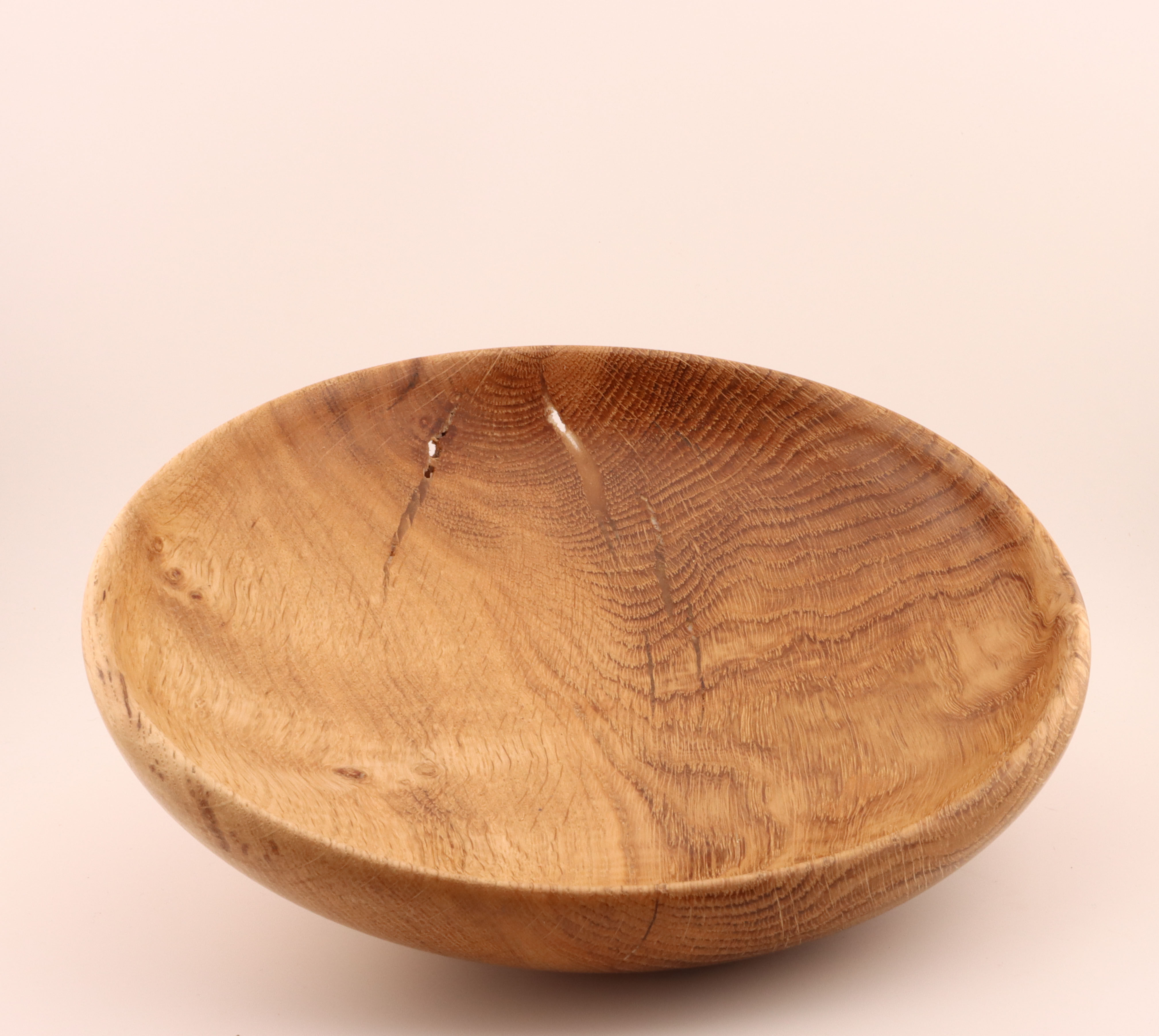

oak bowl with imperfections
sometimes there is very little we can control.
this piece of oak had been stored for more than fifteen years. when i found it, it seemed ready for another life.
the first cuts on the lathe revealed its history almost immediately. a deep crack appeared, followed by several more. far from putting me off, they made me more attentive. working with timber that could split or move unexpectedly requires concentration, but also a certain calmness—steady cuts, measured movements and a willingness to respond to what is revealed.
as the form emerged, it became clear that the cracks were not something to work around and hide. they were part of the wood, part of its story, and would need to be incorporated into whatever it became.
so i introduced another new skill: resin.
i had watched other woodturners experimenting with it and knew that, sooner or later, i would have to give it a try. this piece seemed to make the decision for me.
as the largest crack opened, i mixed the resin and poured it in. it travelled further than expected, disappearing into the timber and finding its way into places i hadn't even realised were there.
then i waited.
forty-eight hours later, i returned to the lathe and continued the process.
the final shape is unfamiliar territory for me. less geometric, more organic, and somehow more appropriate to the age of the oak. i stopped trying to make the wood conform to an idea and instead allowed its imperfections to influence the form.
the cracks remain visible.
the resin doesn't disguise them.
it simply holds the story together.
perhaps that is what i find increasingly interesting about woodturning. the material arrives with a history already written into it. my role isn't necessarily to erase that history, but to uncover it and give it somewhere to go.
i’m very pleased with the finished piece.
and perhaps, just perhaps, old and slightly damaged wood is becoming my thing.
